
Automotive executives often stand under bright lights, making bold promises about the future of driving. For many people, Elon Musk and Tesla are the first names that come to mind when thinking about autonomous vehicles. Yet it appears that another CEO has quietly moved ahead in the race to deploy self-driving taxis.
Rimac’s Verne Robotaxi Fleet Becomes Reality
Mate Rimac, best known for creating extremely fast electric supercars, has unveiled a fully built fleet of robotaxis. The project is called Verne, and while many competitors are still discussing what they plan to achieve, Rimac has already produced 60 completed prototypes and lined them up in a Croatian parking lot to show that the project is real and ready.
From Hypercars to Urban Mobility
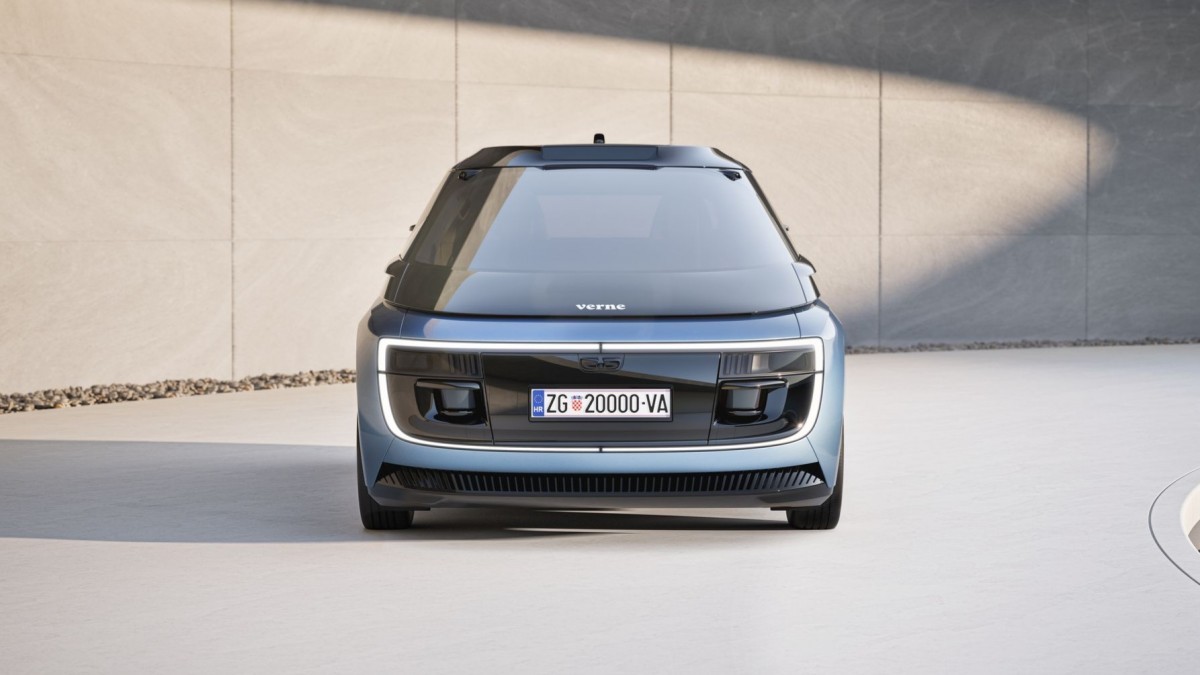
Rimac is widely recognized for the Nevera, an all-electric hypercar with nearly 2,000 horsepower. However, Rimac and his co-founders, Marko Pejković and Adriano Mudri, wanted to address a different challenge: everyday city transportation. To tackle this, they launched Verne a little over two years ago.
Their aim was to create not just a self-driving car but an entire end-to-end service — essentially an autonomous taxi business in a box. This concept is similar to what Cruise tried in the United States and what Waymo is pursuing with its adapted Jaguar electric vehicles, but Verne’s approach stands out.
A Purpose-Built Robotaxi
While most companies modify existing cars by adding cameras, sensors, and computers, Verne has designed a dedicated vehicle from the ground up. Rimac introduced the completed fleet in a simple video filmed on a phone while walking through a parking lot in Croatia. There was no glossy studio, no elaborate set — just rows of finished cars.
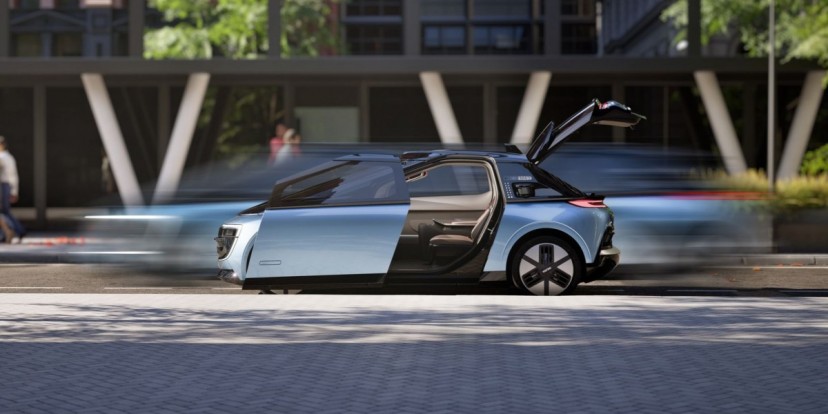
The video underlined a key point: the vehicles are not mock-ups or early test mules; they are real, finished robotaxis. The Verne car itself is a compact two-door hatchback that looks very different from traditional road cars, precisely because it does not have to follow the usual design rules.
Comfort-Oriented Interior
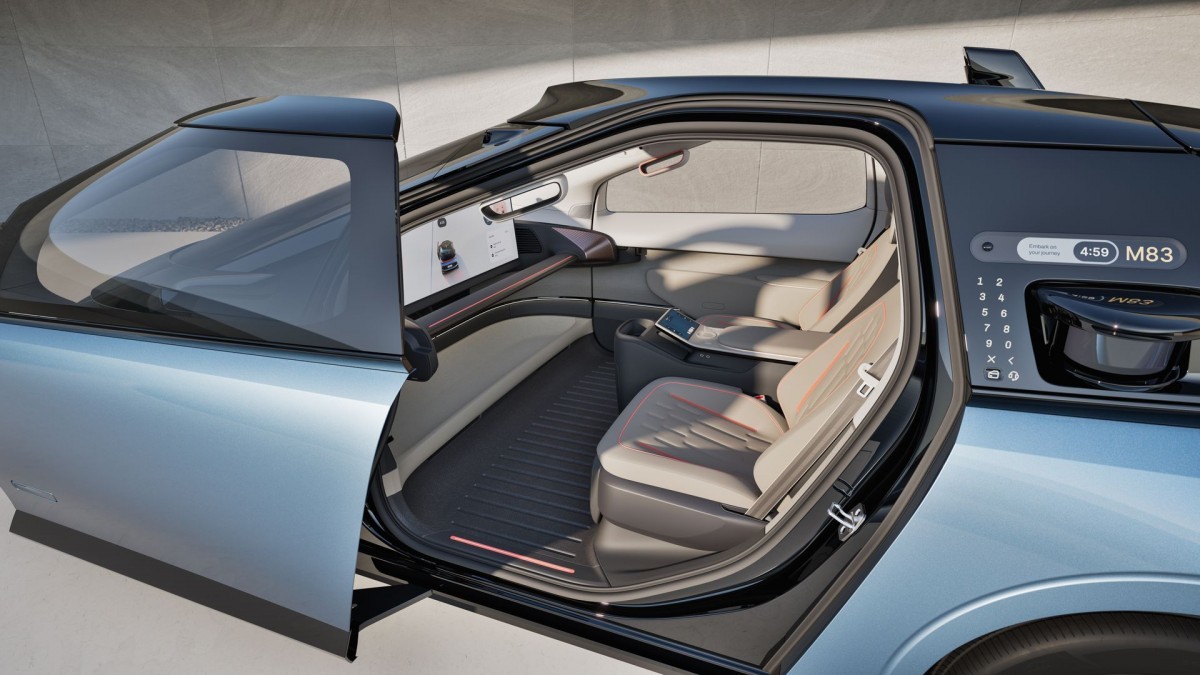
The interior of the Verne robotaxi is focused entirely on passenger comfort. Because the car drives itself, there is no steering wheel and no pedals. The rear bench is gone as well, leaving only two generous seats and plenty of space to stretch out.
At the front of the cabin is a large display that passengers can use to watch YouTube, stream movies, or otherwise stay entertained while the vehicle deals with traffic. The idea is to transform what is usually wasted time in congestion into productive or relaxing time for riders.
Why a Hypercar Maker Is Building Taxis
Some fans of Rimac’s high-performance vehicles may wonder why a creator of record-breaking hypercars is now focused on relatively slow-moving city taxis. Rimac’s reasoning is straightforward: most people spend too much time in tedious, stop-and-go traffic, which very few actually enjoy.
If an autonomous system can handle the boring, stressful parts of urban driving, people will be freer to enjoy driving themselves on open roads, where performance cars truly shine. In this vision, the Verne robotaxi removes the frustration of daily commuting without taking away the pleasure of driving altogether.
Level 5 Autonomy and Launch Plans
The technology inside Verne’s vehicles is advanced. The complete absence of a steering wheel strongly suggests a Level 5 autonomous system, where the car can operate in all conditions without any human intervention.
Verne is already testing these robotaxis on the streets of Zagreb, Croatia. The company plans to officially launch its service in the spring of 2026, offering a clear and relatively near-term rollout date instead of the vague promises often heard elsewhere in the industry.
Strong Financial Backing
To reach this stage, Verne has raised nearly 200 million (approximately 200 million USD, 200 million EUR, and 18 billion INR) from a range of major investors. Mate Rimac’s own company is one of the backers, alongside Kia. The project has also attracted funding from Saudi investment firm Jameel and support from the European Union, giving Verne a solid financial foundation for scaling its robotaxi operations.