
For many people, the biggest obstacle to buying an electric car is still the price. New technology remains costly, and battery packs are particularly expensive to manufacture. This keeps electric vehicles more expensive than comparable gasoline cars.
A Malaysian automaker believes it has found a way around this problem. Perodua has introduced the QV-E, the first electric vehicle from a Malaysian brand. The headline starting price looks very attractive, but buyers need to pay close attention to the conditions before signing the contract.
Price and Battery Leasing Model
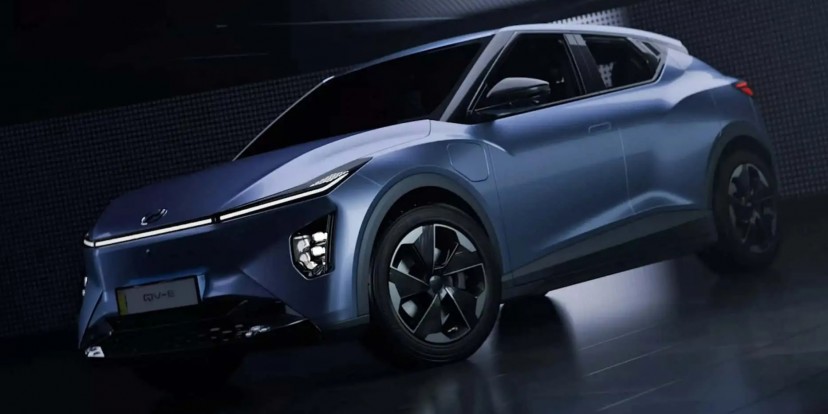
The Perodua QV-E is a subcompact crossover with a starting price of about $19,400 / €16,600 / ₹1,624,000. In local currency, that equals 80,000 ringgit. This makes the car very competitive, roughly on par with similarly sized gasoline models. However, there is a major catch behind the low sticker price: it does not include the battery pack, and the buyer does not actually own the battery.
Instead, the customer must sign a nine-year battery lease. This arrangement shifts a large part of the vehicle’s cost into a long-term monthly payment, reducing the initial purchase price but committing the owner to a lengthy contract.
Monthly Battery Payments
The lease requires a dedicated monthly payment for the battery pack of about $67 / €57 / ₹5,610, or 275 ringgit per month. While this may sound inconvenient, the total cost over nine years is relatively transparent. Over the full lease term, the driver will pay about $7,236 / €6,177 / ₹605,880 for access to the battery.
This approach is not unique to Perodua. Other companies have experimented with similar battery subscription models to lower the initial purchase price of electric cars. Nio and VinFast currently use comparable systems, and Renault tried a battery lease in Europe years ago with the Zoe.
Performance and Powertrain
The Perodua QV-E offers solid performance for everyday use. It uses a single electric motor mounted at the front, delivering 201 horsepower (150 kW) and 285 Nm of torque. This is enough to accelerate the car from 0 to 100 km/h in 7.5 seconds. While it is not intended to be a sports car, the QV-E provides more than enough power for highway merging, overtaking, and daily city driving.
Battery, Range, and Efficiency
The rented battery is a 52.5 kWh lithium iron phosphate pack supplied by CATL. Perodua claims a driving range of 445 km, based on the NEDC test cycle. This testing standard is known for being quite optimistic and often overestimates real-world range.
Under the stricter EPA test cycle, this battery would likely deliver around 203 miles, or about 327 km, of real-world range. That should still be sufficient for daily commuting and typical weekend trips, although frequent long-distance drivers will need to plan charging stops carefully.
Vehicle-to-Load Functionality
The QV-E also includes a useful vehicle-to-load (V2L) feature, allowing the car to act as a large mobile power bank. Owners can plug in devices such as laptops, power tools, or camping equipment directly into the vehicle. This is particularly appealing for outdoor enthusiasts, small businesses using tools on-site, or anyone who wants an emergency power source during blackouts.
Design, Development, and Production Plans
Perodua invested nearly $200,000,000 / €171,000,000 / ₹16,744,000,000 in research and development for the QV-E and collaborated with Magna Steyr on the engineering. The design is contemporary, with a clean look highlighted by horizontal light strips across both the front and rear of the vehicle.
Production is scheduled to begin soon, with an initial output of about 500 units per month. By the third quarter of 2026, Perodua aims to ramp up to 3,000 vehicles per month. This gradual increase is intended to help the company identify and resolve any early quality issues before large volumes reach customers.
What It Means for Malaysian EVs
This measured rollout shows that Perodua has paid attention to the challenges faced by newer brands that scaled up production too quickly and then struggled with quality problems. As Malaysia’s first domestically branded electric car, the QV-E represents a significant step forward for the country’s automotive industry.
The pricing strategy makes the car accessible to more buyers, provided they are comfortable with effectively “renting their fuel tank” for nearly a decade. For drivers who prioritize a lower upfront cost and are willing to take on a long-term battery lease, the Perodua QV-E could be an appealing entry point into electric mobility.