

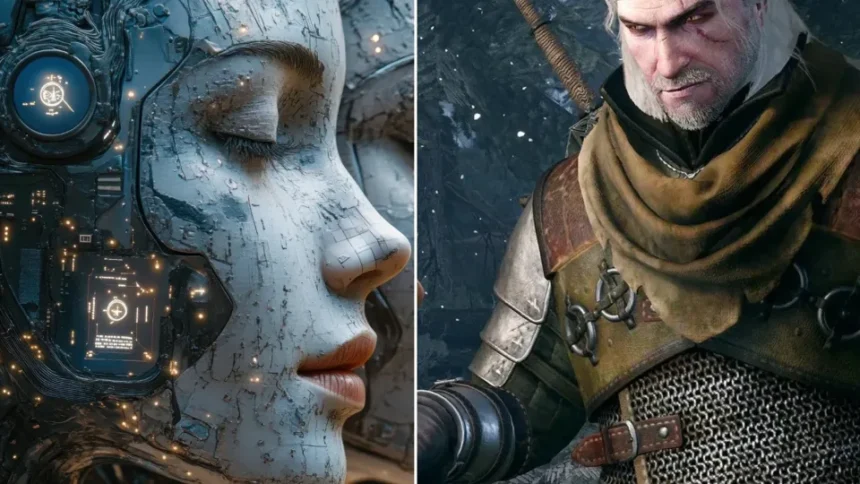
Artificial intelligence in the gaming industry brings both great expectations and serious concerns. For some, it means faster and more efficient creation; for others, it threatens authenticity and jobs. Recently, this topic has become one of the most hotly debated issues in the gaming world.
Konrad Tomaszkiewicz and a New Chapter in His Career
Konrad Tomaszkiewicz, well known as the director of the game The Witcher 3 and one of the creators of Cyberpunk 2077, has spoken openly about artificial intelligence. In his view, AI can never match the human imagination, and the industry cannot rely solely on automated solutions.
He emphasizes that technology should be an assistant, not a replacement. This stance is important not only for developers but also for players, who react sensitively to any sign that games are losing their human touch. For this reason, his words resonated strongly.
A veteran of Polish game development
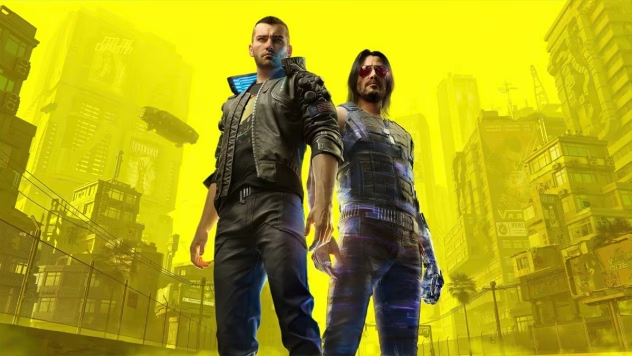
Tomaszkiewicz is considered one of the most prominent veterans of the Polish game development scene. While working on The Witcher 3, he led the project and contributed to its global success. Later, he was also involved in the ambitious Cyberpunk 2077.
Today, he heads his own studio, Rebel Wolves. The team is creating a new large-scale role-playing game, The Blood of Dawnwalker. The first presentations have already attracted a great deal of attention from players.
Using AI in the Creative Process
In an interview, Tomaszkiewicz admitted that his studio had used AI for voice recordings during an earlier development phase, before professional actors were brought in. This practice allowed the team to quickly test ideas and scenes.
However, he clearly distinguishes between prototyping and the final product. AI can help when it is necessary to test a direction or save time in technical stages. But in his opinion, the final emotional impact must remain in human hands.
The Primacy of Human Creativity
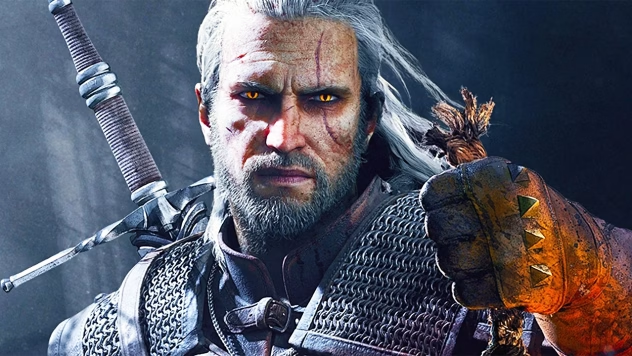
Tomaszkiewicz insists that artificial intelligence should support people rather than push them out. When technology improves a specific part of the workflow, it can be used without guilt. However, it must not become a system that takes over the role of the author.
He also underscores the importance of copyright. AI should not be trained on creators’ work in a way that later imitates and replaces it. In his view, such practices would undermine the very foundations of the industry.
Community Reactions and Controversies
Today, the use of AI in games is dividing the player community more sharply than almost any other topic. Some are excited by new possibilities, while others see a danger to the quality of creative work. As a result, every case quickly becomes a subject of public debate.
There was a recent controversy surrounding ARC Raiders, when critics accused the developers of relying too heavily on AI. Similar reactions appeared around Call of Duty Black Ops 7, where AI-generated illustrations were discovered. These incidents show how easily trust can be lost.
What Does This Mean for the Future?
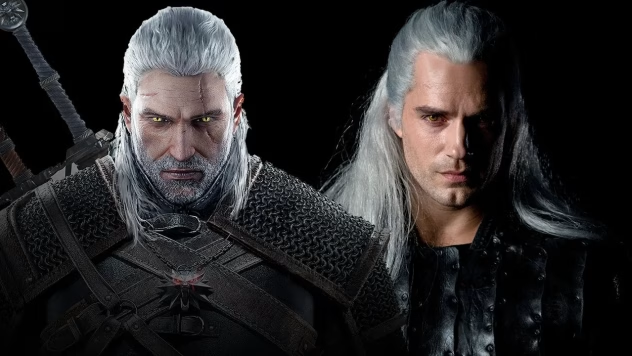
Tomaszkiewicz’s message is straightforward: technology must serve creativity, not overshadow it. Games are born from human emotions, experiences, and the desire to tell stories. No algorithm can replace that.
If the industry maintains this balance, AI can become a powerful tool that does not harm authenticity. But if companies attempt to replace creators with machines, players are unlikely to accept it. The future will therefore depend on responsible decisions made today.